Coxwell Entrance Closure

MGH's main entrance on Coxwell Avenue is closed as the next phase of our redevelopment project begins. Patients and visitors can use the new temporary main entrance on Sammon Avenue between Coxwell Avenue and Knight Street. View our campus map.

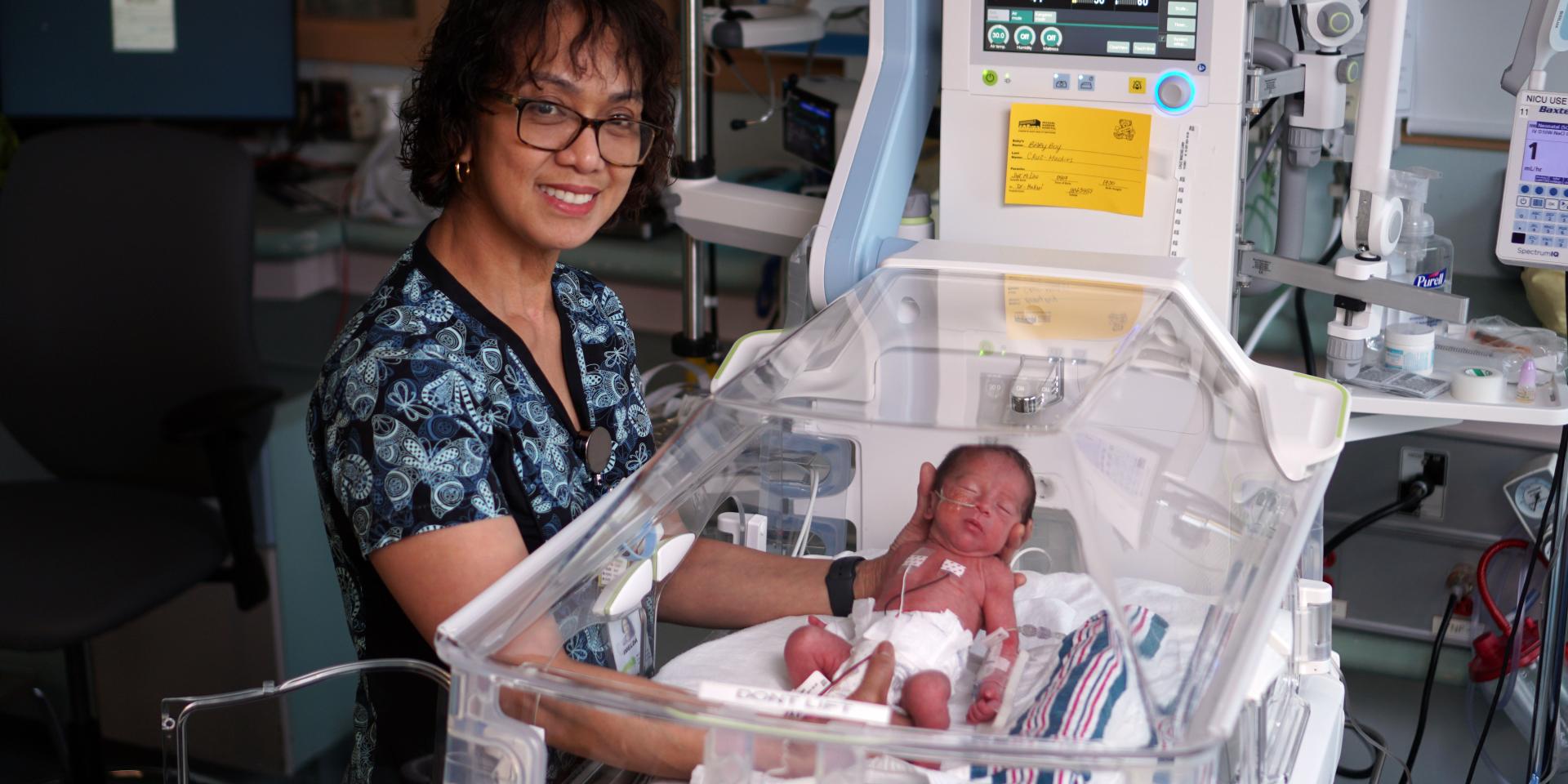
Imelda Macaraeg, Registered Nurse in MGH’s NICU, provides care for a baby.

Neonatal Intensive Care Unit (NICU)

The Neonatal Intensive Care Unit (NICU) at Michael Garron Hospital (MGH) provides high-quality, family-centred and life-saving care to infants born at 30 weeks' gestation or greater. Patients in MGH’s NICU were born at MGH or transferred from another hospital.  

MGH’s NICU is an Advanced Level 2 Neonatal Intensive Care Unit. This means providing care for premature or sick newborns who are moderately ill. Infants may require respiratory support and oxygen, IV infusions, medications, and feeding support including tube feeding. The unit was formerly known as the Special Care Nursery.   

MGH’s NICU uses advanced and specialized medical equipment and technologies. This allows patients to receive a fuller spectrum of critical care in one place that is close to home. 

Visitor Policy: Parents are welcome 24/7. Siblings are allowed in with parents.  

No more than two people are allowed by the baby’s bedside at any one time. 

What to Expect

Accessing the NICU

The NICU is only accessible to those who have an access card. 

All parents will receive an access card and may visit 24/7. 

There will be a charge applied for access cards that are not returned at the end of your baby’s admission

Where will my baby stay?

Babies will be in a pod-style open bay with four to six pods per bay. 

Each pod has a curtain, which can be closed for privacy. 

Nurses always monitor the babies, even if they are not physically at the bedside. Nurses always have access to monitors. 

Parents are welcome to visit 24 hours a day, however, there are no sleeping arrangements for parents in the NICU until closer to discharge. Once a baby is close to being discharged, the care-by-parent room is available.  

What is a care-by-parent room? 

The care-by-parent room is where babies who are close to being discharged can stay with their parents, mimicking a home environment. Think of this as a practice run where parents will stay overnight with their baby and provide the care their baby needs – all while being in the hospital, with nurses close by for support if needed. 

The care-by-parent room is a private room, with a single bed and private washroom (with shower). 

What if I have more than one sick baby?

Occasionally, families who have given birth to multiples (e.g. twins, triplets) may have babies admitted to different hospitals at the same time. This can occur if the babies require different levels of intensive care. 

Family meetings

Parents will have a family meeting with the managing team within 48 to 72 hours of admission to discuss their baby’s care. 

Family meetings will be scheduled throughout the baby’s stay. Additional meetings may be requested by parents. 

Parents are encouraged to ask questions. Bring concerns forward at any time – parents know their babies best. 

It’s normal for parents to feel overwhelmed and worried. The care team wants parents to feel supported and cared for every step of the way.  

Family integrated care

Parents are an important part of their baby’s care team. Parents can help their baby manage pain during simple procedures such as heel pokes or removing dressings. Parents are encouraged to hold their baby, talk to their baby, or breastfeed their baby throughout these procedures. 

Parents are encouraged to stay with their baby as much as possible. They can help care for their baby in many ways including holding, feeding, changing diapers, reading to them, checking their temperature, etc. 

Nurses and doctors will teach parents how to provide the care their baby needs. 

(There may be situations when holding a baby is not possible due to their medical needs.) 

Rounds

Rounds take place Monday to Friday beginning at 9:30 a.m., except Thursday when rounds take place at 10 a.m. 

Parents are encouraged to join rounds to review their baby’s care. 

Due to the open layout of the unit, parents may be asked to leave the area to provide privacy for other families when it is the other family’s turn to be involved with rounds. 

Follow-up care

Babies may require follow-up care after their NICU discharge in MGH clinics. This may include the Eye Clinic for retinopathy of prematurity, neonatal follow-up, newborn assessment, paediatrics or the breastfeeding clinic. These appointments will be arranged prior to discharge. 

Meet the care team

Many on the NICU care team have specialized training and knowledge, allowing the team to provide the best and most appropriate care for premature babies and infants.  

Neonatologist

Neonatologists are doctors who specialize in caring for newborn babies, especially those who are sick or born prematurely. MGH’s neonatologists have expertise in point-of-care echocardiography, peripherally inserted central catheter lines (PICC), paediatric and neonatal critical care transport, and family-integrated care.

Paediatrician

Pediatricians are doctors who specialize in providing general care to babies and children. They work in collaboration with neonatologists and are integral members of the NICU medical team.

Nurses

Nurses monitor the babies at all times. Even if they are not at a baby’s bedside, they always have access to monitors. 

Nurses will feed the babies on set schedules based on the baby’s nutritional needs.  

Respiratory therapist

Respiratory therapists manage the airway and provide breathing support for babies as required during their NICU stay. 

Dietician

Dieticians specialize in the baby’s nutrition. They help to decide the best nutrition for baby whether that is breast milk, donor milk or formula and ensure the baby is getting the right amount of nutrition

Lactation consultant

A lactation consultant helps parents with breastfeeding. They help parents with pumping, show how to breastfeed safely in the NICU, and answer questions related to milk supply. They provide lactation support during the baby’s stay in the NICU and after discharge in the Breastfeeding Clinic.  

Pharmacist

The NICU pharmacist specializes in neonatal medication and ensures the safety and efficacy of drug therapy for babies in the NICU.

Child life specialist

 Child life specialists support babies and their families during their stay in the hospital. They help by supporting bonding, help manage stress and big emotions, and support siblings and families in coping during their NICU stay. 

Social worker

MGH’s social workers provide emotional support, counselling, service navigation, care planning and help locate resources.  

They aim to support parents as they adjust to the NICU routine. They help parents prevent and cope with postpartum mood challenges, such as postpartum depression and anxiety. 

They will encourage parents to practice self-care, foster strong parent-child bonding, support parents/caregivers in managing stress and facilitate effective communication with the care team. 

Health and Safety Guidelines

Stay on top of hand hygiene 

To help prevent transmission of infections, we ask all parents and visitors to wash their hands when they enter the NICU. Handwashing stations are available inside the NICU. 

Hand sanitizer is available throughout the unit and should be used before and after touching the baby. 

Minimize bringing in outside items 

Be careful what you are bringing into the NICU that could be a source of germs. Try to keep coats, toys, etc. elsewhere. 

Keep food in the parent lounge 

No eating is permitted by the baby’s bedside. The unit has a parent lounge where visitors can eat. 

Baby cuddler volunteer program

MGH has trained volunteers that help hold and comfort babies when parents cannot be in the NICU themselves. 

The volunteers hold, speak softly to and sometimes even sing to gently soothe the baby. This makes the baby feel less stressed. 

Cuddlers do not replace parents. If you do not want your baby held by a cuddler, please inform a member of the care team.  

Learn more about MGH’s Baby Cuddling Volunteer Program. 

Collaboration

The NICU partners with other hospitals including The Hospital for Sick Children (SickKids), to coordinate additional care and consultations where needed. 

MGH’s NICU also collaborates closely with MGH’s Family Birthing Centre (FBC) to support high-risk deliveries and respond to neonatal emergencies. 

Contact us
Location
J7
Phone
Phone: 416-469-6130 ext. 6568
Was this page helpful?