Coxwell Entrance Closure

MGH's main entrance on Coxwell Avenue is closed as the next phase of our redevelopment project begins. Patients and visitors can use the new temporary main entrance on Sammon Avenue between Coxwell Avenue and Knight Street. View our campus map.

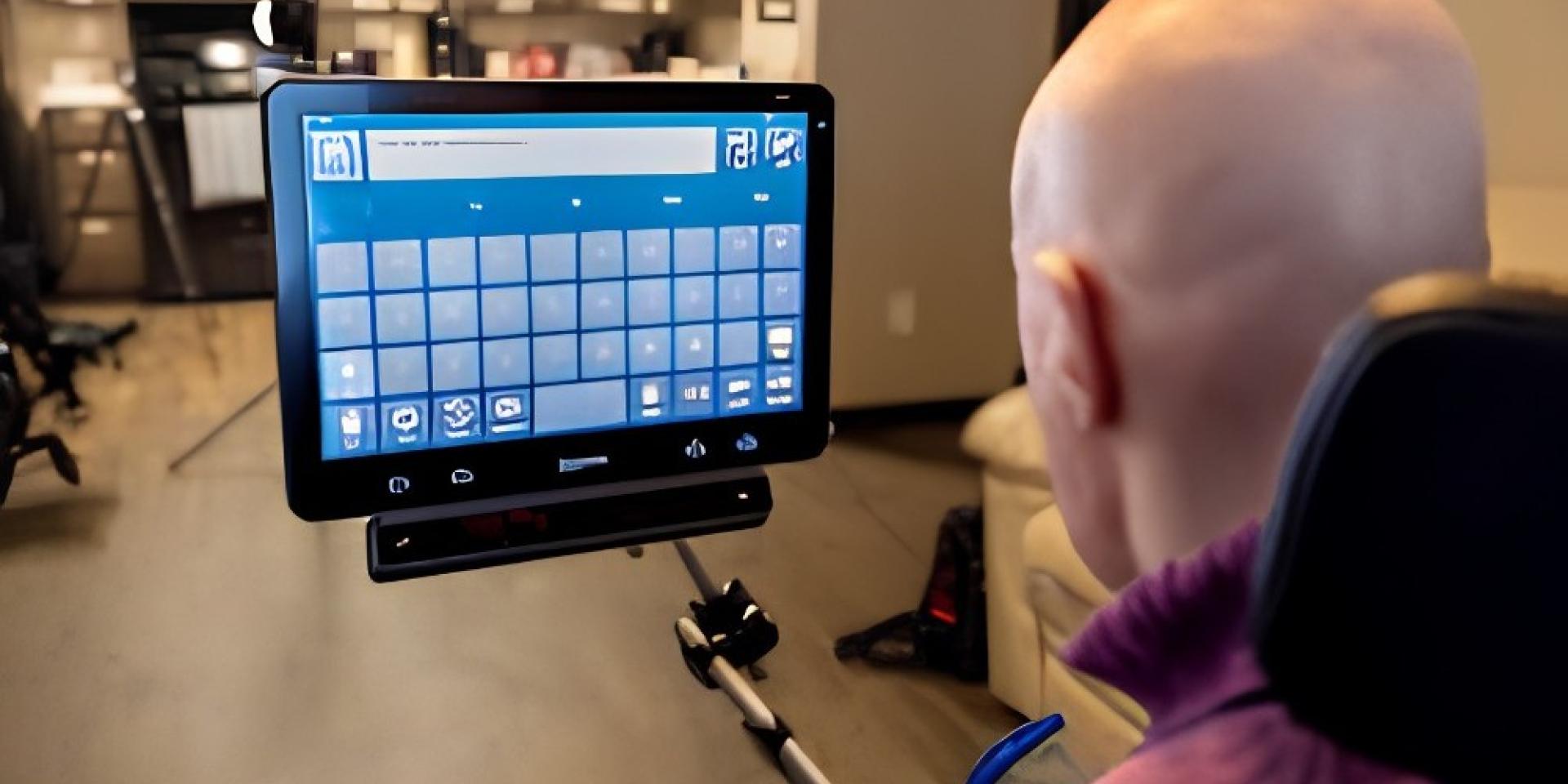
Eye gaze device

“Access Changes Everything”: How MGH speech-language pathologists help patients find their voice

May is Speech and Hearing Month, a time to raise awareness about communication, hearing and swallowing disorders and the healthcare professionals who support patients facing these challenges every day. This year’s theme, Access Changes Everything, reflects the profound impact communication access can have on a patient’s care, dignity and quality of life. 

At Michael Garron Hospital (MGH), speech-language pathologists (SLPs) play an important role in helping patients communicate, swallow safely and maintain social connection during some of the most difficult moments of their lives. 

“Communication is a human right,” says Soledad Silencieux, Speech-Language Pathologist at MGH. “We connect by talking. We share our needs, our feelings, our stories and our personalities through communication. When someone loses that ability, it changes everything.” 

Speech-language pathologists work across many areas of the hospital, supporting patients with swallowing disorders, communication difficulties, cognitive challenges and hearing-related concerns. In acute care settings, swallowing issues are often a primary focus because they can directly impact a patient’s medical stability. However, communication support is another critical and often lesser-known part of the role. 

MGH’s specialized programs make this work especially unique. 

MGH provides care for patients across the full continuum of tracheostomy and long-term ventilation support, including acute care, progressive weaning and complex continuing care. MGH’s Progressive Weaning Centre (PWC) and Long Stay Program (LSP) support patients requiring ventilator care and complex respiratory support. 

Patients from across Ontario are referred to MGH for these specialized programs. 

“We receive patients from places like Windsor, Peterborough and hospitals across the GTA,” says Soledad. “Other hospitals refer patients here because of the expertise we’ve developed in supporting people who are trying to wean from ventilation or who require long-term ventilator care.” 

Many of these patients cannot speak because air is redirected away from their vocal cords through a tracheostomy tube. 

“We have patients who are fully aware, fully engaged and have so much they want to say, but they no longer have a voice,” says Soledad. “Our role is to assess their communication limitations and find solutions that help express themselves again.” 

To support patients who cannot speak, SLPs work closely with interdisciplinary teams to introduce alternative and augmentative communication (AAC) tools and devices which are tailored to each patient’s abilities and needs. 

Support may begin with no-tech strategies, where communication partners adjust how they interact using structured yes-or-no questions or guided conversation to help patients communicate.  

Low-tech supports can include alphabet boards, picture boards, written prompts and communication guides that help patients express needs, emotions, concerns and preferences. 

For some patients, communication support involves high-tech devices, including eye-gaze technology, which allows individuals to control a communication device using only their eyes. 

“These devices can completely transform someone’s world,” shares Soledad. “Patients can email family members, use social media, ask questions, make jokes, talk about their feelings and communicate beyond their basic care needs.” 

Examples of communication access in action can be seen across MGH every day. Patients may use eye-gaze devices, alphabet boards or other tools to stay in touch with loved ones, share updates or maintain connections beyond the hospital setting. For families, access to communication technology can provide reassurance, connection and a way to stay engaged in everyday life. 

For some patients living with complex communication challenges, access to specialized communication technology can be life-changing. Moving from limited yes-or-no responses or supported communication methods to personalized devices can help patients communicate more independently, participate in care decisions and reconnect with the social interactions that are central to daily life. 

The work also extends beyond patients themselves. Families, caregivers and healthcare teams play an important role in supporting communication access, especially for patients who rely on communication tools throughout the day. 

“We often say the communication tools are available, but people become the ramp,” adds Soledad. “If staff and caregivers are comfortable using the tools, patients can fully participate in their care and daily life.”  

Over the past year, awareness around communication access has continued to grow across MGH. SLPs have been working closely with nursing teams, physicians and caregivers to raise awareness, increase comfort and confidence using communication strategies and devices. The goal is to help patients communicate more effectively while supporting care teams with practical ways to better understand patients’ needs, experiences and goals of care. 

“Sometimes people think speech-language pathology is only about swallowing,” says Soledad. “But communication is a huge part of what we do. We’re here to support patients, families and care teams.” 

For Soledad, access changes everything because it gives people their voice back. 

“When patients can communicate, they can share how they feel, participate in decisions, connect with others and maintain their sense of self. That changes everything for patients, families and healthcare teams alike.”