Coxwell Entrance Closure

MGH's main entrance on Coxwell Avenue is closed as the next phase of our redevelopment project begins. Patients and visitors can use the new temporary main entrance on Sammon Avenue between Coxwell Avenue and Knight Street. View our campus map.

Ahmed Ullah Sayed

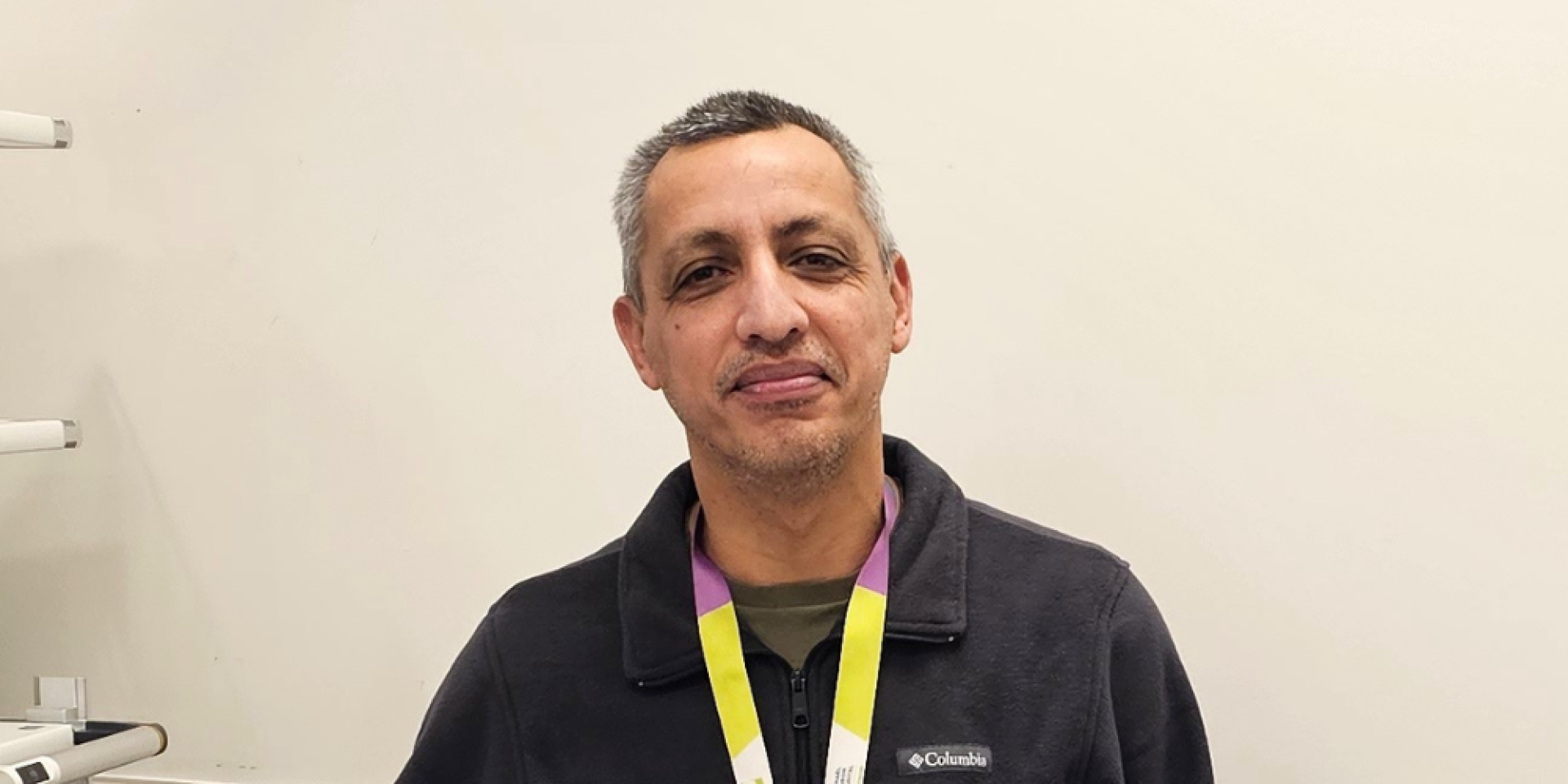
#IamMGH – Meet Ahmed Ullah Sayed

#IamMGH tells the stories of our people. Meet Ahmed Ullah Sayed, Manager of The Rands Family Simulation Centre at Michael Garron Hospital (MGH). 

“I’m the Manager of The Rands Family Simulation Centre at MGH. The Simulation Centre is the central hub for certification and training across the hospital. My role is focused on supporting clinicians, so they feel confident, competent and prepared to provide safe patient care. 

Broadly, the work that is done in the Centre falls into two areas. The first is simulation itself. I support simulation across all clinical services at MGH by working closely with simulation and education leads within each department. Together, we design realistic clinical scenarios that reflect the situations teams face every day. These simulations usually take place in their patient care areas. 

The second area is resuscitation and skills upgrade courses. These courses also incorporate simulation and are designed to help staff maintain, refresh and strengthen critical clinical skills. This work aligns closely with one of our strategic pillars — value and inspire our people, supporting staff retention. Any clinician or student at MGH can enroll in these courses through iLearn, our online learning hub, whether they’re looking to refresh a skill, build confidence or maintain certification.  

Right now, these courses are offered internally, but we’re working towards expanding access in the next year to include healthcare providers in the TEHN catchment area. We work closely with long-term care homes in our community as many clinicians there also need to keep their certifications up-to-date. Being able to support them is a natural extension of our role. 

I recently reached my 10-year milestone at MGH and my journey here began long before I stepped into a management role. I come from a nursing background and completed my student consolidation in the Stavro Emergency Department (ED) at MGH. That experience inspired me to stay at MGH. This hospital is also where I started my first job as a Registered Nurse (RN) and it shaped how I think about patient care and teamwork. 

While working as an RN, I developed a strong passion for mentoring new nursing students and nurses. That interest led me into education. In 2019, I took on the role as a clinical resource leader, where simulation became an increasingly important part of my work, especially during the COVID-19 pandemic. 

COVID was a powerful example of why simulation matters. Simulation allowed us to recreate clinical scenarios in a realistic environment so teams could practice, learn and prepare together. Seeing how simulation helped staff navigate uncertainty and build confidence drew me further into this field. When the opportunity came up to manage the simulation centre, I applied. Today, simulation truly sits at the centre of education and training at MGH. 

The most rewarding part of my job is seeing learning translated into real world impact. Simulation helps improve clinical competence, communication, confidence and staff retention. Staff often share stories about practicing a skill in simulation and then encountering a similar situation the very next day. Hearing that they felt prepared and that things went well is incredibly meaningful.  

Simulation also plays an important role in patient safety. By practicing on mannequins in simulated environments, clinicians are able to make mistakes, ask questions and build muscle memory without putting patients at risk. While it can be difficult to directly measure safety improvements, we consistently see growth in confidence and competence, which ultimately supports safer care.  

One of the most challenging aspects of my role is also one of the most rewarding, which is collaboration. As I am a team of one, I work with almost every department in the hospital. Designing scenarios, aligning objectives and coordinating logistics takes time and flexibility. But when it comes together, the impact is significant. 

While operational work focuses on things like staffing and equipment availability, my focus is on ensuring clinicians can practice safely. I sit on several committees and I’m heavily involved in orientation, new equipment rollouts and systems testing. 

As MGH continues through redevelopment, simulation plays a key role when new clinical spaces or guidelines are introduced. Before a new unit opens or a new process is rolled out, we run simulations to test workflows, equipment placement and response times. These simulations help us identify gaps, such as equipment that isn’t easily accessible or processes that may cause delays, so that changes can be made before patients move in. 

We also use simulation to test new clinical guidelines. Even when policies are carefully designed, testing them in practice often reveals areas that need adjustment. Simulations allow us to refine these processes before full implementation, supporting safer and more effective care. 

When I think about MGH’s values, inclusion resonates with me most. From my early days as a student to my current leadership role, I’ve consistently experienced a culture that values people and works together to find solutions. 

That culture is what has kept me at MGH for the past 10 years. This hospital truly feels like a family. People look out for one another, support each other through challenges and take the time to connect.” 

Was this page helpful?