Coxwell Entrance Closure

MGH's main entrance on Coxwell Avenue is closed as the next phase of our redevelopment project begins. Patients and visitors can use the new temporary main entrance on Sammon Avenue between Coxwell Avenue and Knight Street. View our campus map.

CT scanner donation

A second life for life-saving equipment: MGH donates CT scanner to support patient care in Nigeria

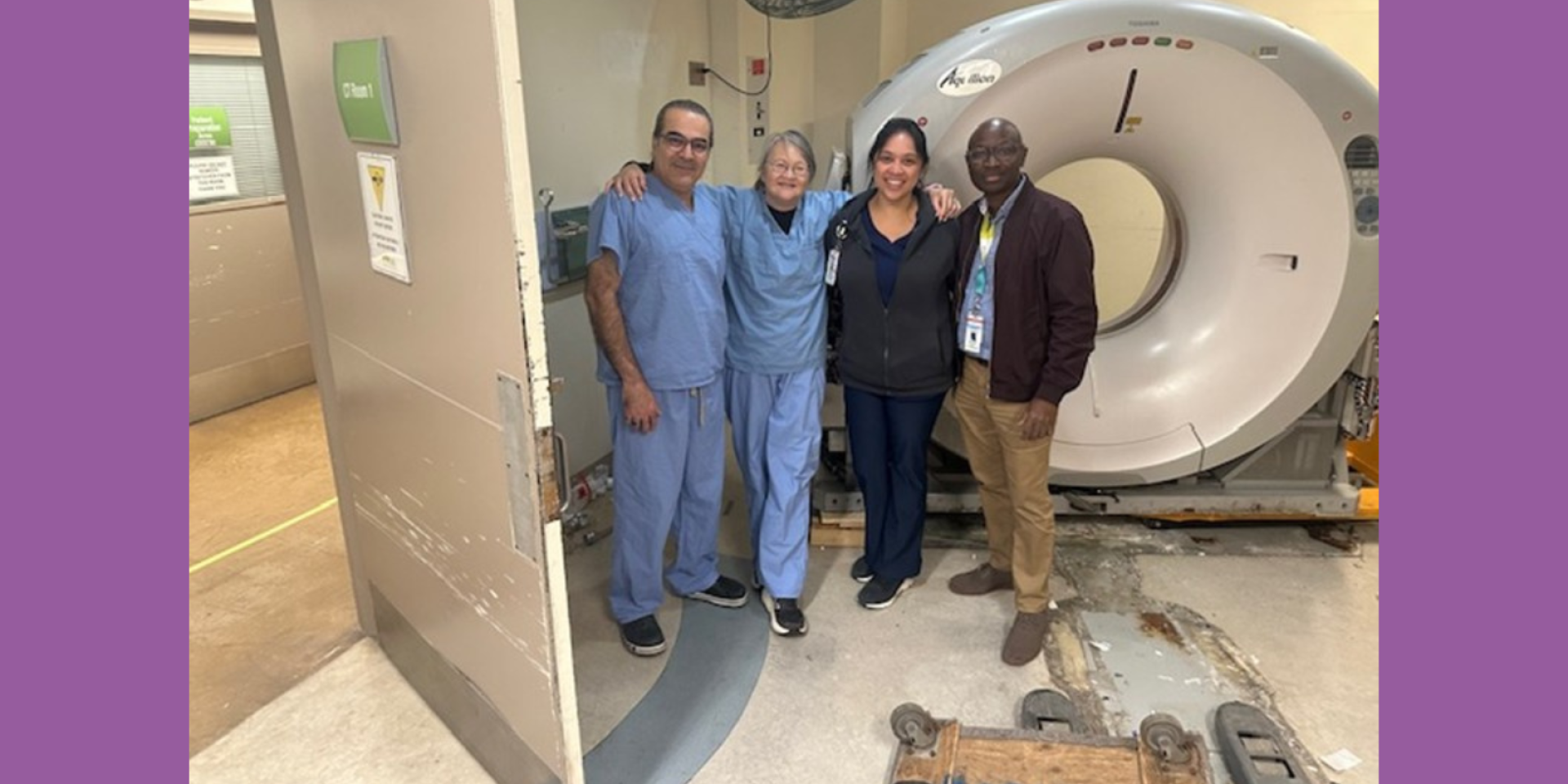
A former CT scanner from Michael Garron Hospital (MGH) is getting a second life, helping expand access to critical diagnostic imaging at Coxwell Hospital in Nigeria. 

The CT scanner was recently decommissioned at MGH following an equipment upgrade and donated to Coxwell Hospital, a growing community hospital founded by Dr. Leke Badmos, who is also an OB/GYN at MGH.  

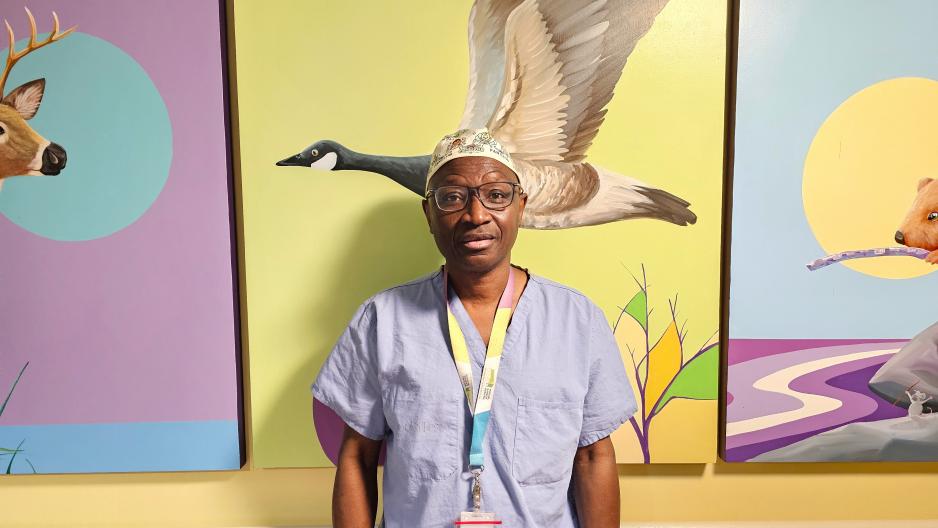
Dr. Badmos
Dr. Badmos stands in front of a colourful painting.

For Dr. Badmos, the donation represents a meaningful step forward in improving access to care. 

“When I was first contacted about the possibility of the scanner being donated, I was surprised,” says Dr. Badmos. “I had shared the vision for Coxwell Hospital with colleagues over the years, but I never expected something of this magnitude. It has gone beyond my expectations.” 

The CT scanner donation came to be when MGH’s Chief and Medical Program Director of Medical Imaging, Dr. Noah Ditkofsky had a chance meeting with Dr. Badmos during the care of a shared patient in the Stavro Emergency Department. 

“One of MGH’s CT scanners had aged to the point where it was no longer meeting our expectations. While no longer suitable for use in our hospital, the equipment was still operational. As someone who cares deeply for the environment, sending the scanner to the junkyard did not sit right with me,” shares Dr. Ditkofsky. 

“Serendipitously, at the same time as we were working on plans to scrap the old CT, Dr. Badmos mentioned his work at Coxwell Hospital and how limited their access to medical imaging was. That conversation made me start to think about whether it might be possible to donate the scanner instead.” 

Dr. Ditkofsky explored whether donating the equipment was possible with colleagues, who were supportive of the idea. He then approached Dr. Badmos and together they began assessing whether transferring the equipment could be done. 

“Access to a CT scanner could save lives at Coxwell Hospital and at the same time extend the life of the machine, keeping it out of the landfill.”  

This made donating it an easy decision. 

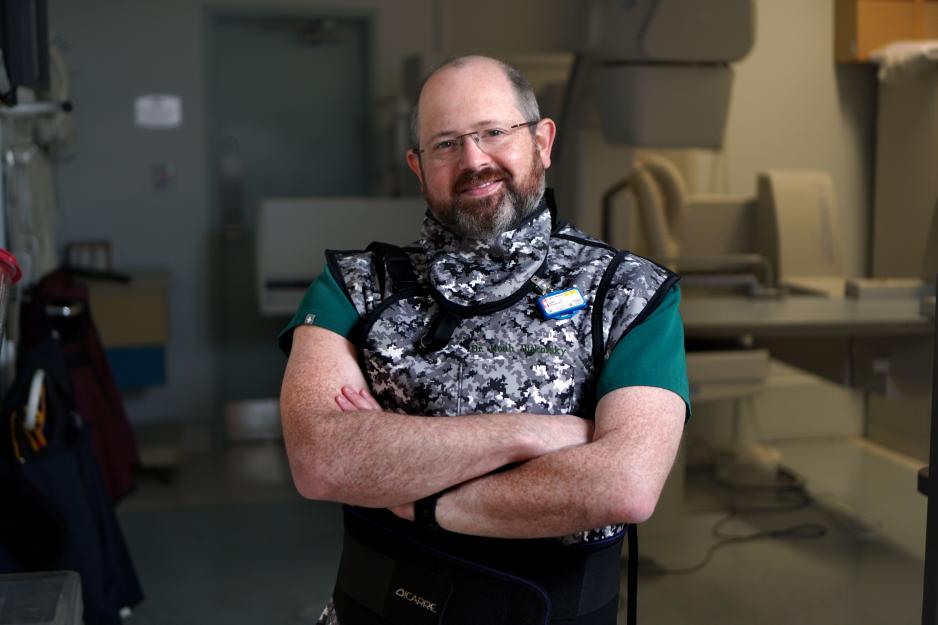
Dr. Ditkofsky stands in a clinical room with medical equipment
Dr. Ditkofsky stands in a clinical room with medical equipment.

Expanding access to life-saving imaging 

Coxwell Hospital was created to help address gaps in access to timely and reliable healthcare services in its region. While Nigeria has highly skilled healthcare professionals, access to advanced diagnostic equipment such as CT scanners remains limited in many communities. 

“In some areas, patients may need to travel 80 to 90 kilometers to access a functioning CT scanner,” Dr. Badmos explains. “Even then, services are not aways available at all hours. For patients facing urgent medical conditions, those delays can have serious consequences.” 

Computed tomography, commonly known as CT imaging, plays a critical role in diagnosing a wide range of conditions. It allows clinicians to view detailed cross-sectional images of the body, helping them identify internal bleeding, fractures, tumors, strokes and other serious medical concerns quickly and accurately.  

For patients experiencing symptoms of a stroke, time is especially critical. 

“With stroke patients, we need to determine whether the stroke is caused by a blood clot or bleeding in the brain before deciding on treatment,” says Dr. Badmos. “The treatments are very different. Without imaging, clinicians are forced to make decisions with limited information. Having access to a CT scanner will significantly improve the care we can provide.”  

Traumatic injuries from motor vehicle collisions are another area where imaging can make a life saving difference. In emergency situations, CT scans help clinicians identify internal injuries that may not be visible during a physical examination. 

“Motor vehicle accidents are unfortunately common,” says Dr. Badmos. “CT imaging allows us to quickly assess internal injuries, including bleeding in the chest or abdomen. The scanner will help reduce the need for exploratory procedures and support faster, more accurate diagnoses, ultimately improving patient care and can save many lives.” 

Strengthening healthcare infrastructure 

For Coxwell Hospital, the arrival of the CT scanner represents growth not only in technology but in capacity. 

“When you bring advanced diagnostic services closer to the community, you strengthen the entire healthcare system around it,” adds Dr. Badmos. “Patients no longer need to travel long distances for imaging and families face fewer financial and logistical burdens. Clinicians can make decisions faster and with greater confidence.” 

Building healthcare infrastructure in resource-limited settings involves more than equipment. It requires training, maintenance, workflow planning and sustainable operations. Dr. Badmos and his team are working to ensure that the CT scanner is integrated thoughtfully into the hospital’s services. 

“We are committed to doing this properly,” he says. “It’s not just about installing a machine. It’s about ensuring we have trained personnel, appropriate protocols and a system that supports safe and effective imaging.” 

A donation with lasting impact 

The donation also reflects a broader commitment to global health partnerships and responsible stewardship of medical equipment. By extending the lifespan of the CT scanner, MGH is helping to maximize its impact beyond its original setting.  

“This scanner has served patients in Toronto,” Dr. Badmos says. “Now it will continue serving patients in Nigeria. That continuity of care across borders is incredibly meaningful.” 

For Dr. Badmos, the project is deeply personal. As a physician who has worked in Canada while maintaining strong ties to Nigeria, he understands both healthcare systems and the opportunities that collaboration can create. 

“I have seen what access to timely imaging can do for patient outcomes,” he says. “I have also seen the challenges that come with limited diagnostic tools. Being able to bridge those two experiences and contribute in a tangible way is very rewarding.” 

The installation of the CT scanner is expected to increase the hospital’s ability to manage emergency cases locally, reduce delays in diagnosis and improve overall patient outcomes. It also demonstrates what is possible when institutions work together. 

“This donation is about more than equipment,” says Dr. Badmos. “It is about building capacity, strengthening healthcare access and giving patients a better chance at timely diagnosis and treatment. It represents collaboration, generosity and a shared commitment to improving care.” 

Later this year, the scanner will begin its new role at Coxwell Hospital. For patients and families who would otherwise face long journeys or uncertain diagnoses, access to this technology may offer clarity, reassurance and in some cases, lifesaving intervention.  

Through this donation, equipment that once supported MGH will now continue its impact abroad. In doing so, it reflects a shared vision that quality healthcare and access to essential diagnostic tools should not be limited by geography.