Coxwell Entrance Closure

MGH's main entrance on Coxwell Avenue is closed as the next phase of our redevelopment project begins. Patients and visitors can use the new temporary main entrance on Sammon Avenue between Coxwell Avenue and Knight Street. View our campus map.

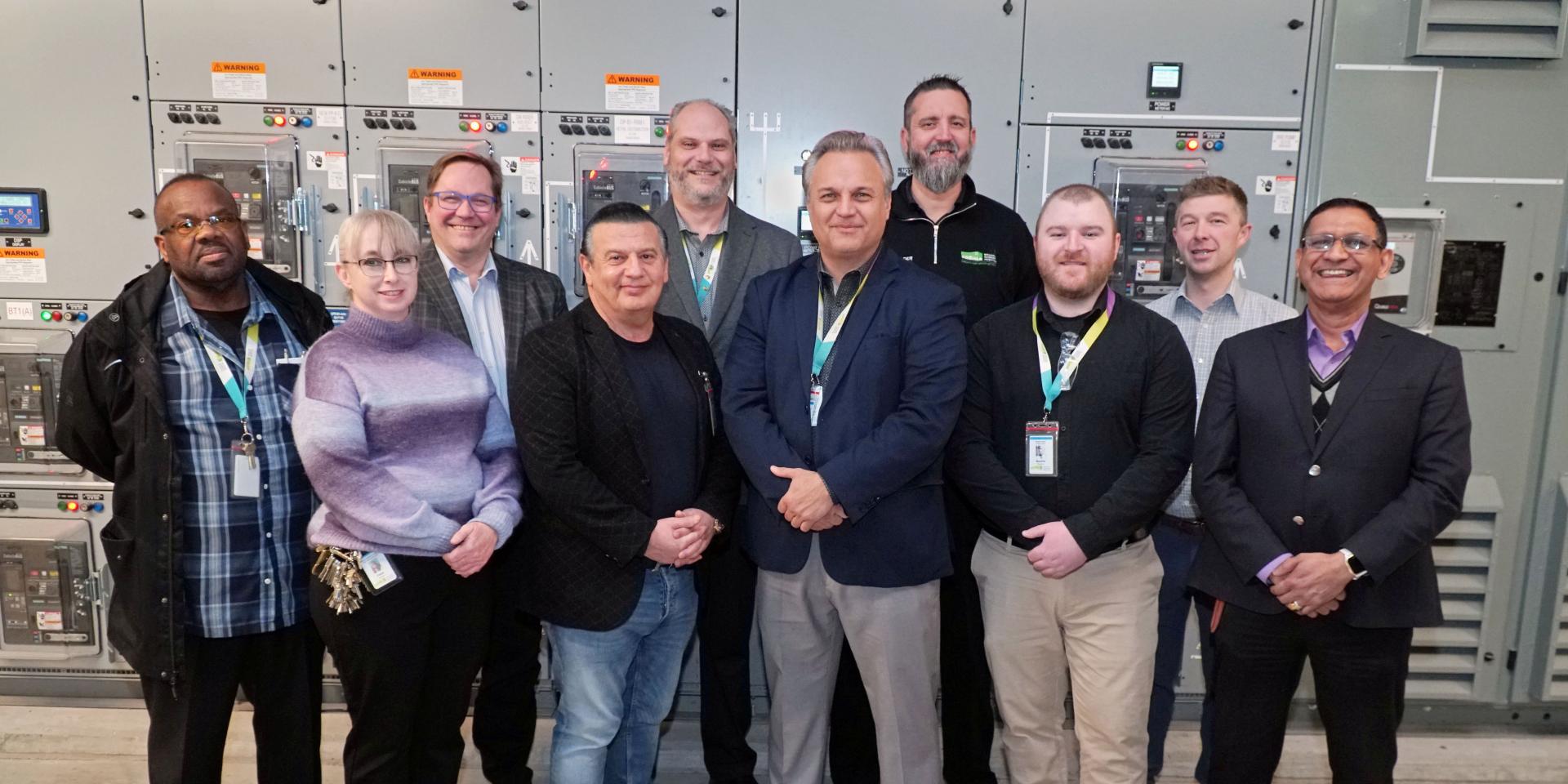
Several staff from MGH stand together and smile at the camera.
After years of collaborative effort, team members from the Engineering Services, Facilities and Protection Services teams at Michael Garron Hospital have achieved a safety score of 88% in 2026 from the Healthcare Insurance Reciprocal of Canada.

Michael Garron Hospital achieves top quartile ranking in national healthcare safety rating

The Healthcare Insurance Reciprocal of Canada (HIROC) is a not-for-profit insurance agency that insures over 700 healthcare organizations across Canada. Each organization insured by HIROC receives a yearly safety rating (called a RiskMark Score), which is benchmarked against industry standards. 

After years of collaboration, renovations, upgrades and improvements, Michael Garron Hospital (MGH) now ranks in the top quartile, achieving the 88th percentile and a risk score of 82.7. As a result of these efforts, Denny Petkovski, Chief of Facility Operations, Redevelopment, Support Services and Volunteer Services and Clinton Hodges, Senior Security Specialist, Protection Services have been invited to present on the hospital’s journey to the top at HIROC’s annual conference later this year. 

The journey from third to first 

HIROC partners with an engineering firm – FM Global – to conduct regular site visits to map safety and risk across multiple systems to determine the RiskMark Score. HIROC and FM Global take a collaborative approach, working closely with the hospital’s Engineering Services, Facilities and Protection Services teams to identify areas for improvement.  

As a part of MGH’s review, key stakeholders met regularly to examine the risk reporting in detail and actively develop plans for improvement in equipment, policy and process. 

“This achievement reflects the dedication and expertise of our Engineering Services, Facilities and Protection Services teams who worked together to make MGH safer for patients, staff and visitors," says Petkovski 

"These improvements represent years of behind-the-scenes work," adds Hodges. "The results speak for themselves. MGH now ranks as one of the safest sites in all of Canada." 

“Congratulations to our Engineering Services, Facilities and Protection Services teams on this remarkable achievement. Ranking at the top nationally highlights the dedicated work that makes our hospital safer for everyone who walks through our doors. This is what sustained commitment to excellence looks like,” shares Phil Kotanidis,  Executive Vice President, Support Services and Chief Administrative Officer at MGH. 

The RiskMark Score is comprehensive, evaluating MGH operations and policies on electrical safety, power plant safety and flood and fire detection and prevention systems. Some key improvements that resulted in this excellent score include the implementation of Code Aqua, a new emergency code flagging spills and/or floods, and integration of risk management tools, which enhanced responses to water leaks. Other interventions included upgrades to fire safety systems and procedures, with changes like valves locked open in case of emergency, and installing or upgrading sprinkler systems on every floor of the hospital.  

MGH has also made significant investments in the Protection Services Department, strengthening security infrastructure and expanding capacity. 

“This rating is a direct result of all these investments,” says Schubert Martin, Director of Engineering Services at MGH. “It validates the work our teams have been doing and demonstrates that prioritizing safety delivers measurable results.” 

Overcoming challenges required coordinated effort 

The work could be challenging at times. The sprinkler retrofitting happened over 2020-21, years in which the COVID-19 pandemic meant upgrades had to be done incrementally to ensure compliance with infection control practices and ongoing operational activities – all while the MGH campus was midway through the redevelopment project. 

“It was certainly challenging,” says Hodges. “But the effort was absolutely worthwhile. When the hospital is exposed to risk, teams are now nimble and efficient. Across the board, hazards have been reduced where and when possible.” 

Building the infrastructure for exceptional care 

Hospital safety infrastructure isn't just about compliance – it's foundational to MGH's ability to deliver care. These behind-the-scenes improvements ensure that clinical teams can focus on what matters most: providing compassionate, high-quality care. 

The work doesn't stop here. As HIROC and FM Global continue to evolve their standards and recommendations, MGH's Engineering Services, Facilities and Protection Services teams are already implementing the next set of improvements. The goal is to push the hospital's safety rating even higher in 2027 and beyond, ensuring MGH remains one of Canada's safest healthcare environments for years to come. 

Was this page helpful?