Coxwell Entrance Closure

MGH's main entrance on Coxwell Avenue is closed as the next phase of our redevelopment project begins. Patients and visitors can use the new temporary main entrance on Sammon Avenue between Coxwell Avenue and Knight Street. View our campus map.

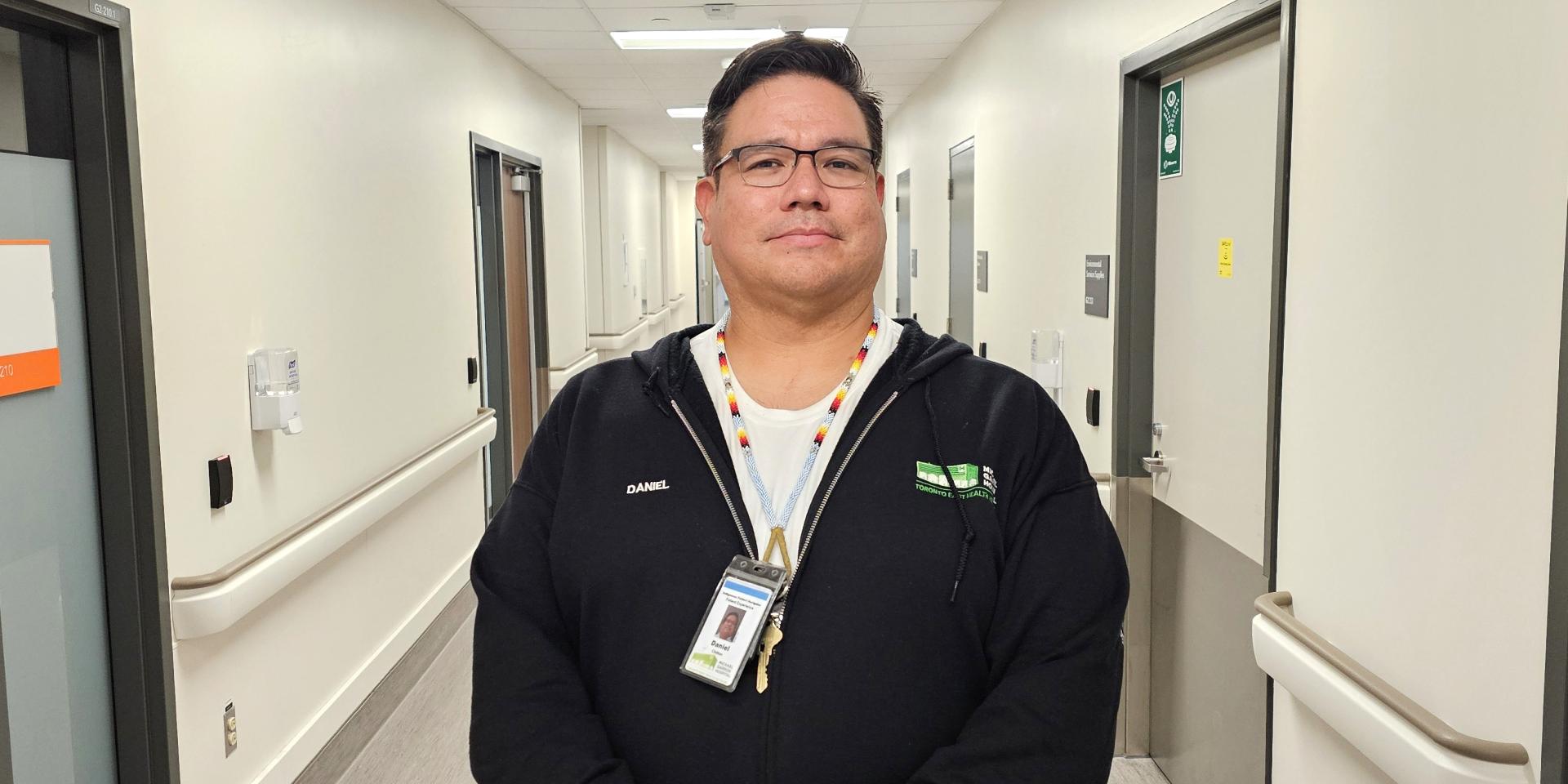
MGH's Indigenous Patient Navigator stands in a hospital hallway

Q&A: Get to know Daniel Chilton, Indigenous Patient Navigator at MGH

We are pleased to welcome Daniel Chilton as our new Indigenous Patient Navigator, a role dedicated to supporting First Nations, Inuit and Métis patients and families as they receive care at Michael Garron Hospital (MGH). 

With more than two decades of experience working in healthcare across northern Ontario, Daniel brings deep clinical knowledge, cultural understanding and a strong commitment to advocacy. His journey has taken him from inpatient mental health units to remote community hospitals. 

Learn more about Daniel, including his background and what this new role means for Indigenous patients and families and the community. 

1. Tell us about yourself. 

My journey in healthcare began in 2000, when I started working in inpatient mental health at a regional hospital in Ontario. It was an unlocked unit at the time and that was my first introduction to de-escalation and mental health support. I worked there for about five years. I learned how to communicate effectively with staff and patients, how to de-escalate and how to build trust. 

In 2008, I returned to my hometown, Moose Factory, which is a small community. I was born and raised in Moose Factory and my identity and connection to my community is a big part of who I am and how I show up in this work. Growing up in a small northern community shaped my understanding of family, responsibility and connection.   

The hospital in Moose Factory was built in 1955 and originally served as a tuberculosis hospital. Its history is heavy, especially for First Nations and Inuit communities who were often sent there for long periods of isolation.  

Despite that, it was a great place to work. Everyone was supportive, close-knit and genuinely happy. In a small community, you really become family. 

Being Indigenous in healthcare also comes with a lot of history and emotion. I’ve seen firsthand how trust can be lost and how powerful it can be when it’s rebuilt. That’s why I take this role seriously. 

For many patients, just having another Indigenous person in the room can make the hospital feel a little safer and a little more familiar. 

Carrying my community with me helps guide how I listen, how I advocate and how I support families during vulnerable moments. It keeps me grounded. 

2. How would you describe the Indigenous Patient Navigator role? 

This is a unique role and I’m grateful to be part of shaping it. As an Indigenous Patient Navigator, I support First Nations, Innuit and Métis patients and families as they move through the healthcare system.  

Historically, the system wasn’t always a safe or supportive place for Indigenous peoples. Many still carry trauma from residential schools, the Sixties Scoop and medical experiences where they felt ignored, scrutinized or marginalized. 

My role is to help rebuild trust, bridge communication and make sure patients feel seen and heard. In my role, I: 

  • support care planning from admission to discharge
  • provide connections to cultural and spiritual resources, including Knowledge Keepers, Healers and Elders
  • assist with traditional holistic practices, medicines and ceremonies
  • help navigate hospital services, language needs and community resources
  • support accessing Non-Insured Health Benefits (NIHB) and transportation
  • provide advocacy and communication support with a patient’s healthcare team 

Sometimes patients just need someone who understands where they’re coming from. Being able to listen, support and guide them makes a real difference and is incredibly meaningful.   

3. What message would you like to share with Indigenous patients and families who may come to MGH? 

I want Indigenous patients and families to know that it’s okay to ask questions and to speak up if something doesn’t feel right. Hospitals can be overwhelming. I’ve seen this throughout my career, especially for people who may not have had good experiences in the past. 

If you’re feeling unsure about your care or you’re not understanding something, you can reach out to me. I’m here to help you navigate the system, advocate and support conversations with your care team or be someone familiar to talk to. My hope is that individuals feel a bit more comfortable and more confident knowing they have someone who understands where they’re coming from. 

4. How do you work with staff and clinical teams across the hospital? 

Physicians, nurses and social workers can reach out to me to consult on a patient and I can reach out to them if a patient needs something specific. 

I work with many departments, including mental health, medicine, surgery and pediatrics. I’ve met children on our Child and Adolescent Psychiatric Unit who were genuinely excited to see another Indigenous person who is working in the hospital. The moment of recognition and connection means a lot. 

I also work with families dealing with complex needs. For example, I recently supported an elderly Inuit patient whose partner was struggling to navigate benefits and registration requirements. I contacted his home region to help verify his registration number so he could access NIHB supports. Once confirmed, we were able to put several resources in place for him. 

I look forward to supporting even more patients and families as awareness of this role grows and to helping ensure they receive culturally safe support throughout their care journey. 

5. What are you most looking forward to in your new role? 

I’m looking forward to being a part of patients’ journeys, especially those who haven’t always had positive experiences with hospitals. Seeing someone relax when they realize they have someone who understands their background and lived experience is powerful. 

I’m also excited to continue building relationships with teams across MGH. Everyone I’ve met so far has been welcoming and I’m hopeful his role will help strengthen trust and healing for many families. 

Most of all, I’m grateful to be here, to support Indigenous patients, to be a familiar face and to help make the healthcare systems feel a little safer, one connection at a time. 

Click here to learn more about our Indigenous Health Services. 

Learn more about Daniel and his role in this Instagram reel! 

Was this page helpful?